
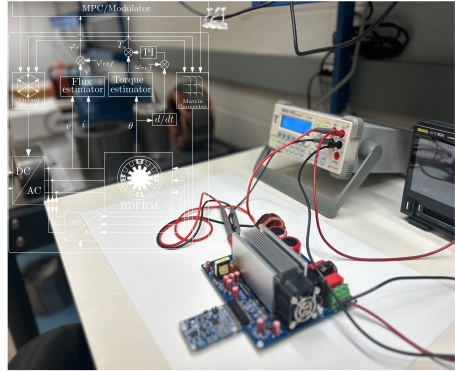
Brushless Doubly-Fed Reluctance Machine (BDFRM) Drivetrain

his project aims to design a cost-effective BDFRM drivetrain controlled by a matrix converter, eliminating permanent magnets and brushes to reduce material cost and maintenance. A reluctance-graph model supports accurate torque and flux estimation for predictive control over a wide speed range. High-voltage GaN devices are evaluated for efficiency and switching performance, delivering strong torque density and low inertia appropriate for utility vehicles and compact electric cars.
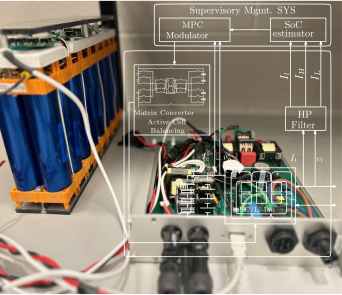
Active Intermodular Cell Balancing

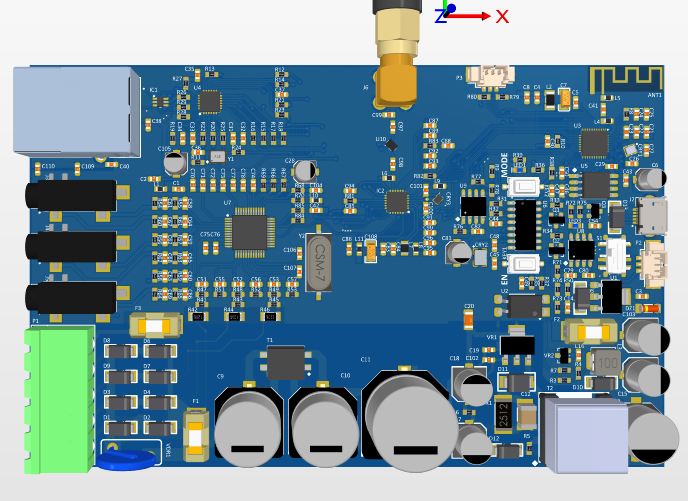
This project aims to develop a bidirectional active balancing architecture that coordinates battery packs and a supercapacitor to reduce losses during charge and discharge. The design uses a matrix-converter-based topology and isolated DC/DC conversion to shift energy between modules while maintaining DC-bus stability. Small-signal analysis, protection, and high-resolution sensing are incorporated to ensure safe operation, enabling improved cycle life and performance for high-voltage EV energy storage systems.

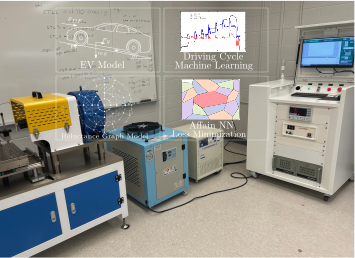
Embedded AI for Loss Minimization

This project aims to reduce drivetrain and powertrain losses under Canadian climate and driving conditions using data-driven control. The approach models the relationship between temperature, acceleration patterns, and multi-speed transmissions, and applies constraints on torque, speed, and current to limit switching and iron losses. A multi-objective optimization considers machine parameters, torque-per-current, field-weakening, and SiC/GaN switching effects, improving efficiency across a wide operating range for passenger and light-duty EVs.

Anti-Theft Solutions for EV Chargers

This project aims to develop a privacy-preserving security system for EV charging sites using edge AI and transformer-based analytics. The design detects cable cutting, tampering, and unauthorized removal by interpreting human motion and interactions in real time. Features are processed on-device and transmitted instead of raw video, which reduces bandwidth and protects privacy. The two-stage architecture improves detection accuracy while lowering compute load, making it suitable for public lots, multifamily properties, and fleets.

EV-Deck: EVSE Decentralized Energy and Charge Control Kit

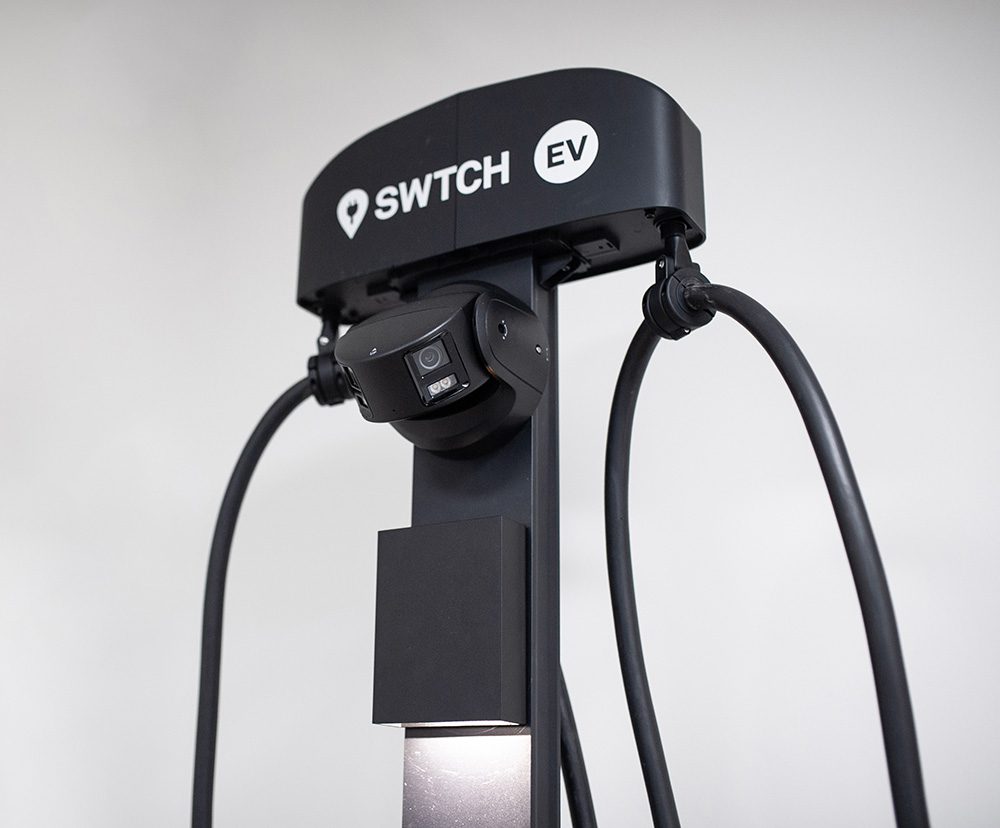
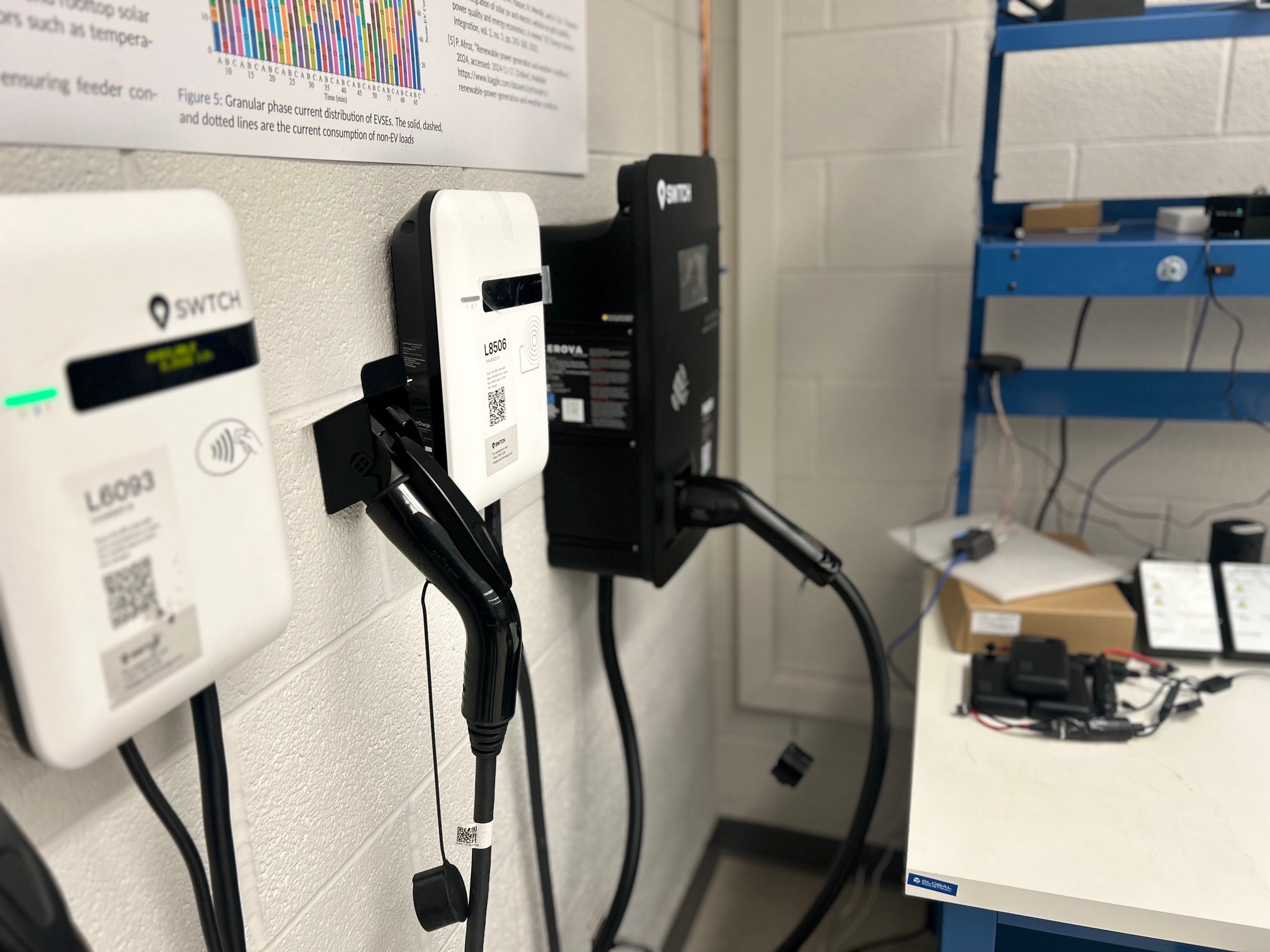
Collaborating with SWTCH Energy and Mitacs, this project aims to develop an affordable energy management system (EMS) hardware/software package. It integrates real-time energy monitoring, dynamic charging, and local transactions, utilizing the Wi-SUN protocol and mesh network architecture to enhance accessibility and reliability. Additionally, an offline transaction algorithm ensures technical and financial functionalities in areas with limited internet access.

Digital Twins in the Loop

This project aims to develop data-driven digital twins of heat pumps, inverters, and EVSEs to enable a low-cost, risk-averse alternative to traditional hardware-in-the-loop testing. The approach supports operation scheduling and energy management that reduce carbon emissions by coordinating consumption across distributed and hierarchical electrical panels supplying EVSE fleets interconnected with heat pumps. The design explicitly accounts for MURB realities, connectivity intermittencies, operational nonlinearities, and behavioral uncertainties, so that control strategies can be validated and deployed with greater reliability and at lower cost.

Community Energy System

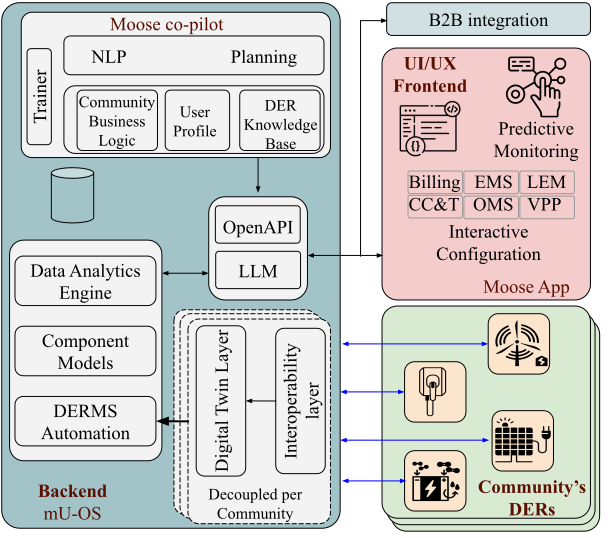
The project envisions communities becoming energy self-sufficient, relying less on centralized power plants and long-distance transmission lines. It will offer financial incentives and technical support to remote communities, transforming them from passive consumers into proactive energy stakeholders. This energy operating system will enhance energy security and minimize losses during transmission, resulting in a more resilient and sustainable energy infrastructure. The project aims to redefine the energy landscape by promoting micro-utilities and DERMS technologies.